
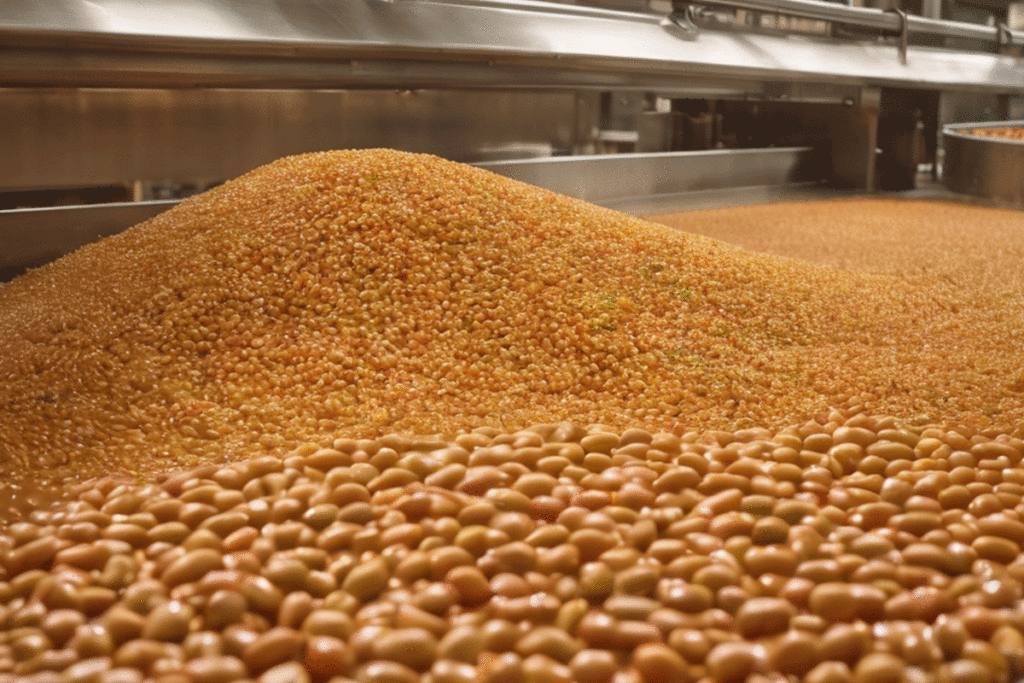
In the grand narrative of the global food industry, plant protein is transitioning from a “supplementary role” to a “leading alternative.” This shift is not merely driven by consumer demand for sustainability; it is a profound technological evolution. For modern food manufacturers, the current challenge—and opportunity—lies in utilizing advanced processing technologies to bridge the gap between plant and animal proteins.
Core Insight: From Rigid to Flexible
Plant proteins are not static raw materials. Current industry research highlights the concept of “Flexible Processing”. The theory posits that proteins possess a “flexible region” within their structure. By inducing changes such as folding, subunit polymerization, or dissociation, manufacturers can significantly improve the expression of the protein’s interfacial functions. This provides the theoretical foundation for creating products that match, or even exceed, the texture of animal proteins.
Hardcore Technology: Physical and Biological Reshaping
To break through the functional limitations of native plant proteins, the industry is adopting diverse modification technologies:
Physical Modification: High-pressure homogenization is becoming a mainstream standard. By generating high-pressure cavitation and shear forces, this technology disperses plant proteins into fine droplets, drastically improving solubility and emulsification without destroying nutritional content. Additionally, ultrasound technology is utilized to enhance protein dispersibility through cavitation effects.
Bio/Chemical Modification: Fermentation is gaining traction not only for flavor adjustment but also for degrading allergens and reducing anti-nutritional factors. Meanwhile, pH shifting (acid/alkali treatment) is used to unfold protein structures and expose hydrophobic groups, thereby enhancing emulsification properties.

The Landing Challenge: Three Key Scenarios
The ultimate goal of these technologies is product application. Currently, innovation is concentrated in three high-growth sectors, each presenting unique processing challenges:
Plant-based Meat: The industry is moving toward high-moisture extrusion to simulate the fibrous structure of real meat. To achieve the correct texture and chewiness, the moisture content of the extruded material must be maintained between 40% and 80%.
Plant-based Milk: To address lactose intolerance and dairy allergies, production focuses on homogenization and heat treatment to improve suspension stability and extend shelf life without compromising nutrition.
Plant-based Egg: Whether in powder or liquid form, the core challenge is simulating the physicochemical changes of real eggs, specifically the transition from gel to solid upon heating.
HY Pack: Providing “Rigid” Protection for “Flexible” Innovation
When manufacturers invest heavily in high-pressure homogenization or enzymatic hydrolysis to achieve the perfect texture, how do you ensure that high-value, highly sensitive product reaches the client perfectly?
This is particularly critical for high-moisture meat analogues. With moisture contents reaching 40%-80%, these products have a delicate, fibrous structure that is highly susceptible to physical deformation and oxidative degradation. Traditional, rough packaging solutions can destroy the texture you worked so hard to engineer.
HY Pack specializes in backend packaging solutions for the plant protein sector. We understand the value behind “flexible processing,” which is why our machinery is engineered to handle high-moisture and high-emulsion products:
Texture Preservation: Designed for delicate high-moisture plant meats, our equipment offers gentle handling and precise sealing to prevent juice loss and structural damage during packaging.
Air-Tight Freshness: For oxidation-prone products like plant-based milk powders or liquid eggs, HY Pack’s advanced sealing technology ensures an oxygen barrier, locking in the nutritional bio-activity achieved during modification.
Flexible Adaptation: From powders to gels, and chunks to liquids, our machines seamlessly integrate with diverse production lines.
In the race for plant protein dominance, superior processing gives your product a soul, but superior packaging ensures that soul survives the journey. Choose HY Pack to secure the final mile of your technological innovation.